
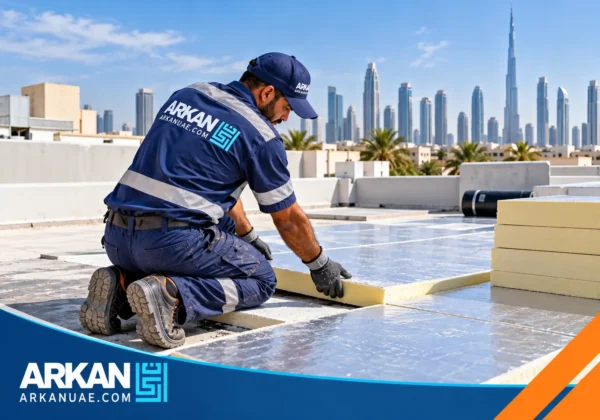
Best Roof Insulation Materials for UAE properties should be selected according to roof type, heat exposure, building use, moisture conditions, and the way the complete roofing system is designed. Villas, apartments, warehouses, commercial buildings, offices, and other properties can all experience significant heat transfer through exposed roofs.
Choosing suitable Roof Insulation Materials UAE properties can use is not simply a matter of selecting the thickest product. Thermal performance, moisture resistance, installation quality, roof drainage, waterproofing compatibility, and long-term protection all need to be considered together.
This guide explains the main materials used for Thermal Roof Insulation UAE projects, their advantages, typical applications, and the factors that help determine the Best Insulation for Roof in UAE properties.
Why Roof Insulation Matters in UAE Weather
Roofs receive direct solar exposure for long periods of the day. Concrete slabs, metal roofs, tiles, and other roof surfaces can absorb heat and transfer part of it toward the occupied spaces below.
Without appropriate thermal protection, upper floors may become noticeably warmer, particularly during periods of intense sunlight.
Proper roof insulation can help:
- Reduce heat transfer through the roof.
- Support more stable indoor temperatures.
- Reduce direct heat impact on upper floors.
- Improve thermal comfort.
- Support air-conditioning performance.
- Protect the overall roof system when correctly installed.
However, insulation should be designed as part of the complete roofing system rather than treated as an isolated layer.
Best Roof Insulation Materials: Quick Comparison
The Best Roof Insulation Materials depend on the roof structure and project requirements. The following table summarizes several commonly used options.
| Insulation material | Main characteristic | Common application | Important consideration |
|---|---|---|---|
| PIR insulation boards | High thermal resistance with rigid board format | Flat roofs and structured roofing systems | Requires correct joints and protection |
| Polyurethane insulation | Thermal insulation available in board or foam systems | Concrete and selected roof assemblies | Application quality is important |
| XPS boards | Rigid closed-cell insulation | Roof systems where moisture resistance is important | Must be integrated correctly with waterproofing |
| EPS boards | Lightweight rigid thermal insulation | Various building insulation applications | Correct density and system design are important |
| Mineral wool | Thermal and acoustic properties | Selected roof and building assemblies | Must be protected from moisture |
| Spray polyurethane foam | Applied directly to form a continuous insulation layer | Complex roof surfaces and selected projects | Requires professional application and protection |
PIR Roof Insulation Boards
PIR, or polyisocyanurate, is a rigid insulation material commonly supplied in board form.
PIR boards can provide strong thermal performance while maintaining a relatively compact insulation layer. This makes them useful in roof systems where both thermal performance and available space are important considerations.
PIR boards may be used in:
- Flat roof systems.
- Concrete roofs.
- Commercial buildings.
- Warehouses.
- Residential properties.
- Roof assemblies designed with separate waterproofing layers.
Installation quality is important. Gaps between boards, poorly fitted joints, damaged sections, or incorrect detailing around penetrations can reduce the effectiveness of the insulation layer.
Polyurethane Roof Insulation
Polyurethane is widely used in thermal insulation systems and may be available as rigid boards or applied foam depending on the project.
This material can create an effective thermal barrier when correctly specified and installed.
Polyurethane-based systems can be useful where:
- The roof receives strong solar exposure.
- A continuous thermal layer is required.
- The project includes complex roof details.
- Insulation needs to be integrated with other roof layers.
The system should always be protected according to the design because thermal insulation alone should not automatically be treated as the final exposed roofing surface.
Spray Polyurethane Foam for Roof Insulation
Spray polyurethane foam is applied directly to the roof surface and expands to form a continuous insulation layer.
One advantage of spray-applied insulation is its ability to follow irregular shapes and cover areas where cutting rigid boards around complicated details may be difficult.
Potential applications include:
- Concrete roofs.
- Metal roofs.
- Roofs with multiple service penetrations.
- Areas requiring continuous thermal coverage.
Professional installation is particularly important because incorrect thickness, uneven application, poor surface preparation, or insufficient protective coating can affect the final system.
XPS Roof Insulation Boards
Extruded polystyrene, commonly known as XPS, is a rigid closed-cell insulation material.
XPS boards are used in various roof systems because they provide thermal insulation and can offer useful resistance to moisture compared with some other insulation materials.
They may be considered for roof assemblies where insulation is exposed to conditions that require careful moisture management.
The boards still need correct installation, including:
- Tight joints.
- Appropriate board thickness.
- Correct positioning within the roof assembly.
- Protection from excessive mechanical damage.
- Proper integration with the waterproofing system.
EPS Roof Insulation
Expanded polystyrene, or EPS, is another rigid insulation material used in building applications.
EPS is lightweight and available in different densities and thicknesses.
The appropriate product should be selected according to:
- Required thermal performance.
- Roof load conditions.
- Expected compression.
- Roof assembly design.
- Moisture exposure.
Using an unsuitable density or installing the boards incorrectly can affect long-term performance.
Mineral Wool Roof Insulation
Mineral wool can provide both thermal and acoustic benefits in suitable building systems.
It may be used in selected roof assemblies, particularly where fire, sound, and thermal performance all form part of the project design.
However, mineral wool must be protected properly from water penetration because moisture can affect the performance of many insulation systems.
For this reason, waterproofing and vapor-control requirements should be considered carefully when mineral wool forms part of the roof assembly.
Roof Heat Insulation Materials for Concrete Roofs
Concrete roofs are common in UAE villas, residential buildings, and commercial properties. Selecting suitable Roof Heat Insulation Materials for concrete roofs requires consideration of both heat exposure and moisture protection.
A typical concrete roof system may include:
- Structural concrete slab.
- Surface repair and preparation.
- Waterproofing or vapor-control layers where required.
- Thermal insulation.
- Protective layers.
- Final roof finish or screed depending on the design.
The exact order can vary according to the roof system being used.
Property owners should avoid adding thermal insulation over damaged or leaking roof surfaces without first assessing the existing waterproofing condition.
Best Insulation for Roof in UAE Villas
The Best Insulation for Roof in UAE villas depends on the type of roof and the problems affecting the property.
For example, a villa with an exposed concrete roof may require:
- Thermal insulation to reduce heat transfer.
- Waterproofing to protect against water penetration.
- Proper slope and drainage.
- Protection around water tanks, pipes, and roof penetrations.
A villa experiencing both high upper-floor temperatures and roof leakage should not treat these as the same problem.
Thermal insulation addresses heat transfer, while waterproofing addresses moisture penetration.
For a detailed comparison, read our guide about roof insulation vs roof waterproofing.
Best Roof Insulation for Flat Roofs
Flat roofs require careful coordination between insulation, waterproofing, drainage, and protective layers.
Because water must move efficiently toward roof outlets, insulation should not interfere with the drainage design.
Important flat-roof considerations include:
- Roof slope.
- Drainage outlet locations.
- Waterproofing membrane condition.
- Insulation thickness.
- Roof penetrations.
- Mechanical equipment.
- Maintenance access.
Rigid insulation boards are commonly suitable for flat-roof assemblies when they are correctly integrated with the waterproofing system.
Thermal Roof Insulation UAE for Metal Roofs
Metal roofs can heat up quickly under direct sunlight and may transfer heat into the spaces below.
Thermal Roof Insulation UAE systems for metal roofs may use:
- Rigid insulation boards.
- Spray polyurethane foam.
- Insulated sandwich panels.
- Mineral wool systems.
- Reflective layers combined with thermal insulation.
The best system depends on whether the roof is new or existing, its structural design, the building’s use, condensation risk, and maintenance requirements.
Are Reflective Roof Coatings the Same as Insulation?
No. Reflective roof coatings and thermal insulation can both help manage roof heat, but they work differently.
Reflective coatings are designed to reflect part of the solar radiation reaching the roof surface.
Thermal insulation reduces heat transfer through the roof assembly itself.
A reflective coating may support roof heat management, but it should not automatically be considered a replacement for a properly designed thermal insulation layer.
White Roof Coatings and Cool Roof Systems
Light-colored and reflective roof finishes can reduce the amount of solar energy absorbed at the roof surface.
These systems can form part of a broader heat-control strategy, particularly on highly exposed roofs.
However, their performance should be considered separately from insulation thickness and thermal resistance.
A complete roof system may combine:
- Reflective surface treatment.
- Thermal insulation.
- Waterproofing.
- Drainage.
- Protective layers.
Roof Insulation Materials UAE Properties Should Choose Carefully
Not every insulation material is suitable for every project.
When selecting Roof Insulation Materials UAE buildings can use, consider:
| Selection factor | Why it matters |
|---|---|
| Thermal performance | Determines how effectively the insulation reduces heat transfer |
| Material thickness | Affects overall thermal resistance and roof height |
| Moisture resistance | Important in roof assemblies exposed to water or condensation |
| Compression strength | Important where the insulation supports protective or traffic layers |
| Compatibility | The insulation must work with waterproofing and other roof materials |
| Roof use | Maintenance roofs, terraces and equipment areas may require different solutions |
| Installation method | Poor workmanship can reduce the performance of even good materials |
How Insulation Thickness Affects Roof Performance
The thickness of the insulation layer can influence thermal performance, but thicker is not automatically better without considering the complete roof design.
The required thickness depends on:
- Insulation material.
- Thermal conductivity.
- Building requirements.
- Roof construction.
- Available installation height.
- Existing roof layers.
Different materials can provide different thermal performance at the same thickness.
Can Roof Insulation Reduce Air-Conditioning Load?
Reducing heat transfer through an exposed roof can help reduce one source of heat entering a building.
This may support more stable indoor temperatures and reduce the amount of heat that the cooling system has to manage.
However, air-conditioning performance also depends on:
- Wall insulation.
- Windows and glazing.
- Air leakage.
- Building orientation.
- Equipment condition.
- Occupancy.
- Internal heat sources.
Roof insulation should therefore be considered one part of the building’s overall thermal performance.
Can Roof Insulation Stop Water Leakage?
No. Thermal insulation should not automatically be expected to stop water leakage.
A waterproofing layer is specifically designed to protect the roof against moisture penetration.
Some insulation products resist moisture better than others, but that does not make them a substitute for a complete waterproofing system.
If a roof already leaks, the source of the leakage should be investigated before insulation work is completed.
Why Waterproofing Must Be Considered With Roof Insulation
Waterproofing protects roof insulation and the building structure from unwanted moisture.
If water reaches certain insulation materials, their performance can be affected and hidden moisture may remain inside the roof assembly.
For this reason, waterproofing details around:
- Roof drains.
- Pipes.
- Water tanks.
- AC supports.
- Parapet walls.
- Expansion joints.
- Service penetrations.
should be considered as part of the complete roofing system.
Roof Insulation for New Buildings vs Existing Roofs
New construction usually allows insulation and waterproofing to be planned together from the beginning.
Existing buildings can be more complicated because the roof may already contain:
- Old waterproofing membranes.
- Previous repairs.
- Damaged screed.
- Existing insulation.
- Tiles.
- Roof equipment.
- Cracks or moisture problems.
An existing roof should therefore be inspected before deciding whether insulation can be added directly or whether existing layers need repair or removal.
Signs Your Roof May Need Better Insulation
Possible signs of poor thermal roof performance include:
- Upper-floor rooms becoming very hot during the day.
- Noticeable heat radiating from ceilings.
- Large temperature difference between upper and lower floors.
- Air-conditioning operating continuously in top-floor rooms.
- An older property with little known roof insulation.
- Exposed concrete or metal roofing without an effective thermal layer.
These signs do not automatically identify the exact problem, but they can indicate that the roof system should be assessed.
Common Roof Insulation Installation Problems
Even high-quality materials can perform poorly if installation is incorrect.
Common problems include:
- Gaps between insulation boards.
- Uneven insulation thickness.
- Damaged boards.
- Poor detailing around roof edges.
- Missing insulation around penetrations.
- Moisture entering the insulation system.
- Insufficient protection above insulation.
- Incorrect integration with waterproofing.
Installation quality is therefore an important part of selecting the Best Roof Insulation Materials.
PIR vs XPS Roof Insulation
PIR and XPS are both rigid insulation materials, but their properties and applications differ.
| Feature | PIR | XPS |
|---|---|---|
| Form | Rigid board | Rigid closed-cell board |
| Thermal performance | Strong thermal performance | Good thermal performance |
| Moisture resistance | Depends on system and facing | Generally useful where moisture resistance is important |
| Typical use | Many structured roof insulation systems | Roof assemblies requiring rigid moisture-resistant insulation |
| Installation | Requires accurate board joints | Requires accurate board joints |
The final choice should be based on the complete roof design rather than one property of the insulation material alone.
EPS vs XPS Roof Insulation
EPS and XPS are both polystyrene-based insulation products but are manufactured differently and have different physical characteristics.
The selection should consider:
- Required thermal resistance.
- Compression strength.
- Moisture exposure.
- Roof traffic.
- Installation location.
- Project budget.
The cheapest material is not automatically the best choice if it does not suit the roof assembly.
Spray Foam vs Insulation Boards
Both spray foam and rigid insulation boards can provide thermal protection, but installation methods differ.
| Feature | Spray foam | Rigid boards |
|---|---|---|
| Application | Applied directly to surface | Individual boards installed in layers |
| Complex roof shapes | Can follow irregular areas | Requires cutting and fitting |
| Joint control | Can create continuous coverage | Board joints need careful installation |
| Thickness control | Depends heavily on application quality | Board thickness is predetermined |
| Repair | Localized foam areas can be treated | Individual boards may be replaced where accessible |
Best Roof Insulation Materials for Villas
Villas often have exposed concrete roofs, water tanks, AC equipment, pipe penetrations, and parapet walls.
These details make both thermal insulation and waterproofing important.
When selecting the Best Roof Insulation Materials for a villa, the contractor should assess:
- Existing waterproofing.
- Concrete condition.
- Roof slope.
- Drainage outlets.
- Service penetrations.
- Upper-floor heat conditions.
- Available roof height.
Best Roof Insulation Materials for Warehouses
Warehouses may use metal, sandwich-panel, concrete, or other roof systems.
Large roof areas can receive significant solar exposure, making thermal control particularly important.
Possible insulation systems include:
- Insulated sandwich panels.
- Spray polyurethane foam.
- Rigid insulation boards.
- Mineral wool systems.
- Reflective treatments combined with thermal insulation.
The building’s use, fire requirements, roof structure, and internal environment should guide material selection.
Best Roof Insulation Materials for Commercial Buildings
Commercial buildings may contain equipment, service areas, access walkways, drainage systems, and multiple roof penetrations.
The insulation system should therefore provide thermal performance without interfering with maintenance access or waterproofing.
High-traffic roof areas may also require stronger protective layers over the insulation.
Roof Insulation Materials for Dubai Properties
Dubai properties can include villas, towers, commercial buildings, warehouses, offices, and low-rise residential buildings with very different roof structures.
For professional service information, visit our page about roof insulation and waterproofing in Dubai.
The most appropriate system should be selected after assessing existing roof layers, heat exposure, waterproofing condition, and drainage.
Roof Insulation Materials for Sharjah Properties
Buildings in Sharjah can also experience significant roof heat exposure and may require combined thermal insulation and waterproofing solutions.
Visit our dedicated page for roof waterproofing and insulation in Sharjah.
Roof Insulation Materials for Abu Dhabi Properties
Villas, commercial buildings, warehouses, and other properties in Abu Dhabi can use different insulation systems according to the roof structure and project requirements.
For service details, visit roof insulation and waterproofing services in Abu Dhabi.
How to Choose the Best Insulation for Roof in UAE
Choosing the Best Insulation for Roof in UAE properties requires more than comparing material names.
The following factors should be reviewed:
| Question | Why it matters |
|---|---|
| What type of roof is installed? | Concrete, metal and other roofs require different systems |
| Is the roof already waterproofed? | Insulation must work correctly with the waterproofing layer |
| Is there existing leakage? | Water problems should be investigated first |
| How much heat enters through the roof? | Helps determine the thermal requirement |
| Will people walk on the roof? | Insulation may need additional compression resistance and protection |
| Is there roof equipment? | AC units, tanks and pipes require careful detailing |
| Is the building residential or commercial? | Usage influences system design and maintenance requirements |
Roof Heat Insulation Materials and Waterproofing Together
Roof Heat Insulation Materials should be coordinated carefully with waterproofing systems.
A properly designed roof may require:
- Inspection of the concrete or structural roof.
- Repair of cracks and damaged surfaces.
- Preparation of drainage points.
- Installation of waterproofing layers.
- Installation of thermal insulation according to the design.
- Protective layers or screed.
- Final roof finish where required.
The sequence varies according to the chosen roofing system.
For more detail on the two functions, see our guide comparing roof waterproofing and roof insulation.
How Long Does Roof Insulation Last?
The service life of roof insulation depends on the material, installation quality, roof protection, moisture exposure, maintenance, and whether other roof components remain in good condition.
Insulation can lose effectiveness prematurely if:
- Water penetrates the roof system.
- The material is physically damaged.
- Boards move or separate.
- Protective layers fail.
- Repeated roof work damages the insulation.
Regular roof inspection helps identify issues before they affect larger areas.
Can Old Roof Insulation Be Replaced?
Yes. Existing insulation can sometimes be removed and replaced when it is damaged, wet, compressed, poorly installed, or no longer suitable for the roof system.
Before replacement, it is important to determine why the old system failed.
If water leakage caused the damage, the waterproofing issue should be corrected before new insulation is installed.
Roof Insulation Cost Factors
The cost of roof insulation varies because buildings and roofing systems differ.
| Cost factor | Why it matters |
|---|---|
| Roof area | Larger roofs require more insulation material and labor |
| Insulation material | PIR, XPS, EPS, foam and mineral wool have different costs |
| Thickness | Thicker insulation requires more material |
| Existing roof condition | Repairs may be required before installation |
| Waterproofing | A combined system may require additional layers |
| Roof access | Difficult access can increase labor requirements |
| Roof details | Pipes, tanks, AC units and penetrations require additional work |
A roof inspection is generally required before a suitable system and accurate quotation can be prepared.
Which Roof Insulation Material Is Best?
There is no single material that is best for every property.
The correct answer depends on:
- Roof type.
- Thermal requirements.
- Moisture exposure.
- Waterproofing system.
- Available installation depth.
- Roof traffic.
- Building use.
- Budget.
The Best Roof Insulation Materials are the materials that meet the technical requirements of the specific roof while being installed as part of a correctly designed system.
Need Better Roof Insulation? Contact Arkan
Get professional advice on the best roof insulation materials for UAE weather, including thermal insulation and waterproofing solutions for villas and commercial properties.
Frequently Asked Questions About Roof Insulation Materials
What are the best roof insulation materials for UAE weather?
The Best Roof Insulation Materials may include PIR boards, polyurethane systems, XPS, EPS, mineral wool, and spray foam depending on the roof type and project requirements.
What is the best insulation for a concrete roof?
The best system depends on the concrete roof condition, waterproofing, drainage, required thermal performance, and whether the roof is used for maintenance or access. Rigid insulation boards and polyurethane systems are commonly considered for suitable concrete roofs.
What Roof Insulation Materials UAE properties commonly use?
Roof Insulation Materials UAE properties may use include PIR, XPS, EPS, polyurethane foam, mineral wool, and insulated panel systems depending on the roof design.
Is XPS good for roof insulation?
XPS is a rigid closed-cell insulation material that can be useful in roof systems where both thermal performance and moisture resistance are important considerations.
Is polyurethane foam suitable for roof insulation?
Polyurethane foam can provide a continuous thermal insulation layer and may be useful on roofs with irregular details. Professional application and suitable protection are important.
Is reflective paint enough for roof insulation?
Reflective coatings can reduce solar heat absorption at the roof surface, but they are not automatically a replacement for a dedicated thermal insulation layer.
Does roof insulation stop water leakage?
No. Thermal insulation and waterproofing have different functions. Waterproofing should be used where protection against water penetration is required.
What is Thermal Roof Insulation UAE used for?
Thermal Roof Insulation UAE systems are designed to reduce heat transfer through exposed roof assemblies and support improved indoor thermal performance.
What is the Best Insulation for Roof in UAE villas?
The Best Insulation for Roof in UAE villas depends on the concrete condition, existing waterproofing, heat exposure, roof drainage, insulation thickness, and other roof details.
What are common Roof Heat Insulation Materials?
Common Roof Heat Insulation Materials include rigid PIR, XPS and EPS boards, polyurethane foam, mineral wool, and insulated panel systems.
Should waterproofing be checked before roof insulation?
Yes. If the roof has signs of leakage or damaged waterproofing, those issues should be assessed before new insulation is installed.
Can roof insulation be installed on an existing building?
Yes, but the existing roof layers, waterproofing, drainage, cracks, equipment, and available installation height should be inspected before the system is selected.
Need Professional Roof Insulation?
Choosing the Best Roof Insulation Materials starts with understanding the existing roof, heat exposure, waterproofing condition, building use, and required thermal performance.
Arkan provides roof insulation and waterproofing solutions for residential and commercial properties across the UAE.
For Dubai properties, visit our roof insulation services in Dubai.
You can also explore our dedicated services for roof insulation in Sharjah and roof waterproofing and insulation in Abu Dhabi.
Contact Arkan on 0527514348 for information about thermal roof insulation, waterproofing, roof heat protection, and combined roofing systems.