
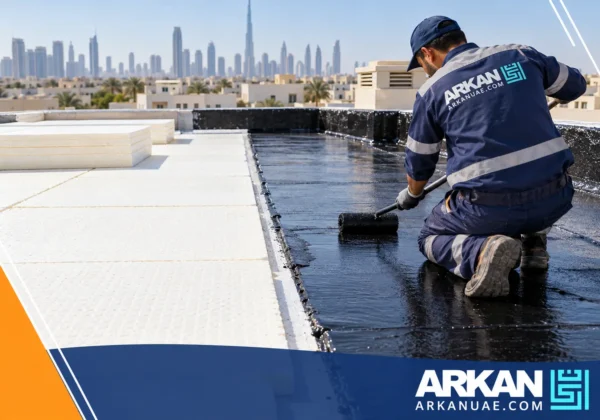
Roof Insulation vs Roof Waterproofing is an important distinction for property owners in the UAE because the two systems solve different roof problems. Roof insulation mainly helps reduce heat transfer through the roof, while waterproofing is designed to prevent rainwater, moisture, and water penetration from entering the building.
Although the two services are different, many villas, homes, commercial buildings, warehouses, and other properties can benefit from using both. Understanding the difference between roof insulation and waterproofing helps property owners choose the right solution instead of applying a system that does not address the actual problem.
This guide explains Roof Waterproofing vs Roof Insulation, how each system works, the common materials used, warning signs to watch for, and situations where a UAE roof may require insulation, waterproofing, or a combined solution.
What Is Roof Insulation?
Roof insulation is designed to reduce heat transfer between the exterior roof surface and the interior of the building.
In hot climates, roofs can absorb significant heat during the day. Without an effective insulation layer, some of that heat can move through the roof structure and contribute to higher indoor temperatures.
Roof Insulation UAE properties use can help create a thermal barrier that limits this heat transfer and supports a more stable indoor environment.
Depending on the roof structure and project requirements, insulation may be installed above, below, or within parts of the roof assembly.
What does roof insulation help with?
- Reducing heat transfer through the roof.
- Helping maintain more stable indoor temperatures.
- Reducing direct heat impact on upper floors.
- Supporting the efficiency of air-conditioning systems.
- Improving thermal comfort inside the property.
- Protecting some roof components from repeated temperature changes when correctly designed.
What Is Roof Waterproofing?
Roof waterproofing is designed to stop water from penetrating the roof structure.
Water can enter through cracks, weak joints, damaged membranes, poorly sealed drainage points, roof penetrations, or deteriorated surface coatings.
Roof Waterproofing UAE properties require is therefore focused on moisture protection rather than heat control.
A properly selected waterproofing system creates a protective layer that helps prevent rainwater and other moisture from reaching the concrete slab or internal building areas.
What does roof waterproofing help with?
- Reducing water penetration through the roof.
- Protecting concrete roof surfaces from moisture.
- Reducing the risk of ceiling water stains.
- Protecting areas around roof joints and penetrations.
- Reducing moisture-related deterioration.
- Helping protect internal finishes from roof leakage.
Roof Insulation vs Roof Waterproofing: Main Difference
The main difference between Roof Insulation vs Roof Waterproofing is the problem each system is designed to solve.
| Feature | Roof insulation | Roof waterproofing |
|---|---|---|
| Main purpose | Reduce heat transfer | Prevent water penetration |
| Main problem addressed | Heat entering through the roof | Water and moisture entering through the roof |
| Typical benefit | Improved thermal performance | Protection against roof leakage |
| Common materials | Thermal insulation boards, foam and other insulating materials | Bituminous membranes, polyurethane systems and protective coatings |
| Can it stop roof leaks? | Not necessarily | Designed specifically for water protection |
| Can it reduce roof heat? | Yes, depending on the system | Not its primary purpose |
This is why a property with a leaking roof does not necessarily need thermal insulation first, while a very hot upper floor does not necessarily have a waterproofing problem.
Roof Waterproofing vs Roof Insulation: Which One Do You Need?
When comparing Roof Waterproofing vs Roof Insulation, the correct choice depends on the symptoms and condition of the property.
You may need roof waterproofing when:
- Water appears on the ceiling after rain.
- Moisture stains develop on upper-floor ceilings.
- Paint or plaster begins peeling because of moisture.
- Cracks or damaged waterproofing layers are visible on the roof.
- Water collects around roof joints or penetrations.
- An existing waterproofing membrane has deteriorated.
You may need roof insulation when:
- The upper floor becomes excessively hot during the day.
- Heat appears to enter mainly through the roof.
- The property has little or no existing thermal insulation.
- Air-conditioning struggles to maintain comfortable temperatures upstairs.
- A new roof system is being designed and thermal performance needs improvement.
Some properties show both sets of symptoms. In that situation, a combined waterproofing and insulation system may be more appropriate.
Can a Roof Need Both Waterproofing and Insulation?
Yes. Waterproofing and insulation are often complementary rather than competing services.
A roof can require thermal insulation to reduce heat transfer while also requiring waterproofing to prevent moisture penetration.
For example, a concrete villa roof may have strong heat exposure during the summer and also contain old waterproofing layers that no longer provide sufficient protection against water.
In this situation, treating only one issue may leave the second problem unresolved.
The roof should therefore be assessed as a complete system before deciding which materials and installation sequence are appropriate.
Difference Between Roof Insulation and Waterproofing Materials
The difference between roof insulation and waterproofing also appears in the materials used for each purpose.
Common roof insulation materials
Roof insulation materials are selected primarily for their ability to reduce heat transfer.
Common examples may include:
- Rigid insulation boards.
- Foam-based thermal insulation.
- Polystyrene-based insulation products.
- Polyurethane or similar insulation systems.
- Other thermal barrier materials designed for roof assemblies.
The most appropriate material depends on the roof structure, installation method, building use, and overall system design.
Common roof waterproofing materials
Waterproofing materials are selected for their ability to resist moisture and create a continuous protective barrier.
Common systems may include:
- Bituminous waterproofing membranes.
- Liquid-applied waterproofing coatings.
- Polyurethane waterproofing systems.
- Cementitious waterproofing products.
- Protective roof coatings.
- Waterproofing systems designed for joints and roof penetrations.
The correct waterproofing material depends on the roof condition, expected exposure, substrate, drainage design, and existing roof layers.
Why Roof Waterproofing Matters in UAE Properties
Water penetration can cause problems even in locations where rainfall is relatively limited during much of the year.
A damaged roof waterproofing system may allow water to enter through cracks, joints, service penetrations, drainage areas, and other weak points.
Once water enters the roof assembly, symptoms may appear inside the building as ceiling stains, peeling paint, damp patches, or deterioration of internal finishes.
Professional Roof Waterproofing UAE services should therefore focus not only on applying a coating but also on identifying weak points and preparing the roof properly before the waterproofing system is installed.
Property owners in Dubai can learn more about waterproofing and roof insulation in Dubai.
Why Roof Insulation Matters in UAE Weather
Roofs are directly exposed to sunlight for long periods, which can increase the temperature of the roof surface and surrounding building materials.
Without sufficient thermal protection, some of this heat can transfer into the occupied spaces below.
A suitable Roof Insulation UAE system can help reduce this transfer by creating a thermal resistance layer between the exterior roof and the internal areas.
Roof insulation is particularly relevant for:
- Top-floor apartments.
- Villas.
- Warehouses.
- Commercial buildings.
- Offices located directly below roofs.
- Buildings with large exposed concrete roof areas.
Does Waterproofing Provide Thermal Insulation?
Waterproofing should not automatically be considered a substitute for thermal insulation.
Some roof coatings may reflect part of the solar radiation or influence surface temperature, but their primary role is usually moisture protection.
If reducing heat transfer is the main objective, the roof system should include materials specifically designed for thermal insulation.
This is one of the most important points when considering Roof Insulation vs Roof Waterproofing.
Does Roof Insulation Prevent Water Leakage?
Thermal insulation alone is not necessarily waterproof.
Some insulation materials can be negatively affected when water reaches them, depending on the material and roof design.
A property owner should therefore not assume that installing roof insulation automatically protects the roof from leakage.
Where water penetration is a concern, an appropriate waterproofing layer should form part of the roof system.
Which Should Be Installed First: Waterproofing or Insulation?
The correct installation sequence depends on the type of roofing system and project design.
Different roof assemblies can position insulation and waterproofing layers differently.
The correct sequence should consider:
- Roof structure.
- Concrete condition.
- Drainage design.
- Existing roof layers.
- Type of insulation material.
- Type of waterproofing membrane.
- Expected maintenance requirements.
This is why roof systems should be planned as an integrated assembly rather than treating each layer independently.
Signs Your Roof May Need Waterproofing
Roof leakage may develop gradually, so early warning signs should not be ignored.
| Warning sign | Possible problem |
|---|---|
| Water stains on ceilings | Possible roof moisture penetration |
| Peeling ceiling paint | Moisture behind internal finishes |
| Damp upper walls | Water entering from roof or nearby joints |
| Visible membrane damage | Deteriorated waterproofing protection |
| Cracks around roof details | Potential pathway for water |
| Repeated leakage after rain | Existing system may require repair or replacement |
In Sharjah, property owners can find additional information about roof waterproofing and insulation services in Sharjah.
Signs Your Roof May Need Better Insulation
Thermal insulation problems are usually identified through heat-related symptoms rather than visible water damage.
Possible warning signs include:
- Upper rooms becoming significantly hotter than lower floors.
- Rapid indoor temperature increase during sunny periods.
- Air-conditioning running frequently on upper floors.
- Noticeable heat radiating from ceiling surfaces.
- An older roof with little or no thermal insulation.
These signs do not automatically prove that insulation is the only problem, but they can justify a professional assessment of the roof assembly.
Can Existing Roof Waterproofing Be Repaired?
Whether an existing waterproofing system can be repaired depends on the extent and cause of the damage.
Localized defects may sometimes be repaired, while widespread deterioration may require a larger section or the entire waterproofing system to be renewed.
Factors that influence the decision include:
- Age of the waterproofing layer.
- Extent of cracking or separation.
- Condition of the roof substrate.
- Number of leakage points.
- Previous repairs.
- Drainage condition.
Applying a new layer over a severely deteriorated surface without proper preparation may not solve the underlying problem.
Common Roof Waterproofing Problems
Roof waterproofing can fail for several reasons.
Common problems include:
- Cracked waterproofing membranes.
- Poor surface preparation.
- Open joints.
- Damage around pipes and service penetrations.
- Ponding water.
- Weak drainage around roof outlets.
- Aged protective coatings.
- Mechanical damage to roof layers.
Finding the source of water entry is an important part of selecting the correct repair method.
Common Roof Insulation Problems
Thermal insulation performance may also decline when the system is incorrectly installed or damaged.
Potential problems include:
- Gaps between insulation boards.
- Insufficient insulation thickness.
- Compression or damage to insulation materials.
- Moisture reaching insulation layers.
- Poor detailing around roof edges and penetrations.
- Incomplete coverage of exposed areas.
Proper installation is therefore as important as selecting the insulation material itself.
Waterproofing and Roof Insulation for Concrete Roofs
Concrete roofs are common across residential and commercial buildings and may require both moisture and thermal protection.
The concrete surface should be inspected for cracks, damaged areas, drainage problems, and previous roof treatments before a new system is applied.
A typical combined solution may involve:
- Roof inspection.
- Cleaning and surface preparation.
- Repairing cracks and weak areas.
- Preparing drainage points and penetrations.
- Installing the required waterproofing system.
- Installing thermal insulation according to the roof design.
- Adding protective layers where required.
- Checking roof drainage and final details.
The exact sequence depends on the selected roof system and project specifications.
Roof Waterproofing and Insulation in Abu Dhabi
Different buildings can have different roof conditions even when they are exposed to similar weather.
Villas, residential buildings, warehouses, commercial properties, and older roofs may each require a different combination of waterproofing and insulation materials.
For service information, visit our page about waterproofing and roof insulation in Abu Dhabi.
Roof Waterproofing and Insulation in Ajman
Property owners should avoid choosing waterproofing systems based only on product names or price. Roof condition, cracks, existing membranes, drainage points, and the building’s use should all be considered.
For properties in Ajman, Arkan provides information about roof waterproofing services in Ajman.
Should You Waterproof a Roof Before It Starts Leaking?
Waterproofing does not always have to wait until visible leakage appears inside the building.
An aging roof membrane may show cracks, separation, or surface deterioration before water reaches the interior.
Inspecting and maintaining waterproofing layers before severe failure can help reduce the risk of larger moisture problems.
This can be particularly useful when:
- The waterproofing system is old.
- Previous repairs are visible.
- Roof cracks are developing.
- Drainage around outlets is poor.
- Maintenance work has damaged part of the membrane.
Can Waterproofing Reduce Roof Maintenance Problems?
A correctly installed waterproofing system can reduce the risk of water-related roof problems, but it still requires periodic inspection.
Roof outlets should remain clear, surface damage should be repaired, and service work should not puncture or damage waterproofing layers.
Preventive inspection is usually easier than waiting until water has already reached the building interior.
Roof Insulation vs Roof Waterproofing Cost Factors
The cost of Roof Insulation vs Roof Waterproofing cannot be compared using one fixed figure because the systems use different materials and installation methods.
| Cost factor | Why it matters |
|---|---|
| Roof area | Larger roofs require more material and labor |
| Roof condition | Cracks and damaged surfaces may require repair first |
| Existing layers | Old membranes or insulation may need removal or treatment |
| Material type | Different waterproofing and insulation systems have different installation requirements |
| Access | Difficult roof access can affect labor requirements |
| Roof details | Pipes, equipment, joints and penetrations require additional detailing |
| Combined system | Installing both waterproofing and insulation requires multiple roof layers |
A proper roof inspection is usually necessary before an accurate solution and quotation can be prepared.
How to Choose Between Roof Insulation and Waterproofing
The simplest way to understand the choice is to identify the main problem first.
| Problem | Likely solution to investigate |
|---|---|
| Roof leakage | Waterproofing |
| Ceiling moisture stains | Waterproofing inspection |
| Excessive heat from roof | Thermal insulation |
| Hot upper floor and old roof | Roof insulation assessment |
| Heat problems and water leakage | Combined waterproofing and insulation system |
| New roof construction | Integrated insulation and waterproofing design |
The main lesson from comparing Roof Waterproofing vs Roof Insulation is that the systems should not be treated as interchangeable.
Roof Insulation & Waterproofing UAE – Get Expert Help
Professional roof insulation and waterproofing solutions for heat protection, roof leaks, moisture problems and combined roofing systems across the UAE.
Frequently Asked Questions About Roof Insulation and Waterproofing
What is the main difference between roof insulation and waterproofing?
The main difference between roof insulation and waterproofing is their purpose. Roof insulation reduces heat transfer, while waterproofing creates a protective barrier against water and moisture penetration.
Is roof waterproofing the same as roof insulation?
No. Waterproofing and insulation perform different functions. Waterproofing is intended to prevent water penetration, while insulation is designed primarily to reduce heat transfer.
Does roof insulation stop water leaks?
Not necessarily. Thermal insulation should not automatically be considered a waterproofing layer. A separate waterproofing system may be required to protect the roof against water penetration.
Can a roof have both waterproofing and insulation?
Yes. Many roof systems use both. Waterproofing protects against moisture, while insulation improves thermal performance.
Which is more important: roof insulation or waterproofing?
Neither system is universally more important because they solve different problems. A leaking roof requires moisture protection, while excessive heat transfer may require thermal insulation. Some roofs need both.
How do I know whether my roof needs waterproofing?
Water stains, peeling paint, damp ceilings, visible roof cracks, damaged membranes, and repeated leakage after rain can indicate that the waterproofing system should be inspected.
How do I know whether my roof needs insulation?
Excessive heat on upper floors, hot ceilings, frequent air-conditioning use, and a roof with little existing thermal protection may indicate that insulation should be assessed.
Can waterproofing be installed over an old roof?
It depends on the condition of the existing roof. The surface, old membranes, cracks, drainage areas, and other layers should be inspected before deciding whether a new waterproofing system can be installed over them.
What are common Roof Waterproofing UAE systems?
Roof Waterproofing UAE projects may use bituminous membranes, liquid-applied coatings, polyurethane systems, cementitious materials, and other waterproofing products depending on the roof condition and design.
What are common Roof Insulation UAE materials?
Roof Insulation UAE systems may use rigid insulation boards, foam-based products, polystyrene materials, polyurethane insulation, and other thermal materials selected according to the roof assembly.
Need Roof Waterproofing or Insulation?
Choosing between Roof Insulation vs Roof Waterproofing starts with identifying whether the main problem is heat transfer, moisture penetration, or both.
Arkan provides roof waterproofing and insulation solutions for residential and commercial properties across the UAE.
For Dubai properties, visit our Waterproofing and Roof Insulation Dubai service page.
You can also explore our dedicated services for roof waterproofing in Sharjah and roof insulation and waterproofing in Abu Dhabi.
Contact Arkan on 0527514348 for information about roof waterproofing, thermal insulation, roof leakage protection, and combined roof systems.