
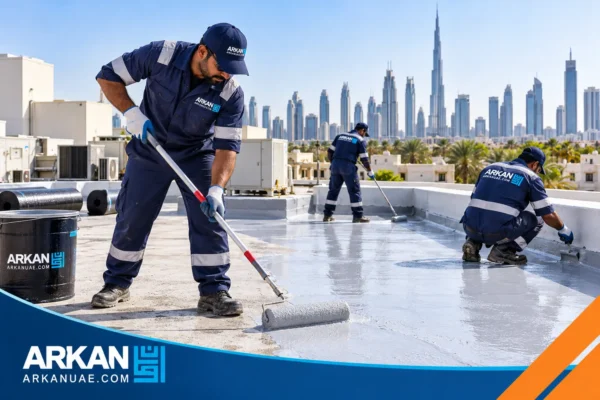
Roof Waterproofing Methods for concrete roofs vary according to the condition of the roof, the existing surface, drainage design, exposure to water, previous repairs, and the type of building. Villas, residential buildings, warehouses, offices, and commercial properties across the UAE can all develop roof leakage when waterproofing layers become damaged, cracked, poorly installed, or affected by long-term exposure.
Choosing the right Concrete Roof Waterproofing system is not simply a matter of applying a coating over the roof surface. Cracks, joints, drainage outlets, parapet walls, service penetrations, and old waterproofing layers must all be assessed before a new system is selected.
This guide explains the most common Waterproofing Methods for Concrete Roofs, including bituminous membranes, polyurethane systems, cementitious waterproofing, liquid-applied membranes, and protective roof coatings. It also explains how to choose the Best Waterproofing for Concrete Roof conditions commonly found in UAE properties.
Why Concrete Roof Waterproofing Is Important
Concrete is strong and widely used in roof construction, but concrete alone should not be treated as a complete waterproofing system.
Small cracks, construction joints, service openings, drainage points, and surface deterioration can allow water to penetrate the roof assembly.
Once water reaches the concrete and surrounding roof layers, property owners may notice:
- Water stains on ceilings.
- Peeling paint.
- Damp patches on upper walls.
- Moisture around ceiling corners.
- Damage around roof penetrations.
- Repeated leakage after rainfall.
Professional Roof Waterproofing UAE services should therefore focus on both the visible roof surface and the weak points where water can enter.
Roof Waterproofing Methods: Quick Comparison
The most suitable Roof Waterproofing Methods depend on the roof condition and project requirements.
| Waterproofing method | Main advantage | Typical use | Important consideration |
|---|---|---|---|
| Bituminous membrane | Creates a durable sheet-based waterproofing layer | Concrete roofs and flat roofs | Joints and detailing must be installed correctly |
| Polyurethane waterproofing | Creates a continuous liquid-applied membrane | Roofs with complex details and penetrations | Surface preparation is critical |
| Cementitious waterproofing | Compatible with concrete and cement-based surfaces | Selected concrete roof areas | Movement and cracking must be considered |
| Liquid-applied membrane | Can create seamless coverage | Complex roof surfaces | Correct thickness and curing are important |
| Protective roof coating | Provides surface protection depending on the system | Maintenance and selected roof applications | Not every coating is a full waterproofing membrane |
1. Bituminous Membrane Waterproofing
Bituminous membrane systems are among the most widely used Waterproofing Methods for Concrete Roofs.
The system normally uses prefabricated waterproofing sheets installed over a prepared roof surface.
Depending on the system, membranes may be applied using heat or other approved installation methods.
Advantages of bituminous waterproofing
- Suitable for many flat concrete roofs.
- Creates a continuous waterproofing barrier.
- Can be used on residential and commercial properties.
- Available in different membrane types and thicknesses.
- Can provide long-term protection when installed correctly.
Important installation areas
Bituminous waterproofing requires careful detailing around:
- Roof drains.
- Parapet walls.
- Pipe penetrations.
- Expansion joints.
- AC equipment supports.
- Water tank bases.
- Roof edges.
A membrane can fail even when the main roof area appears correctly covered if these details are not properly sealed.
2. Polyurethane Roof Waterproofing
Polyurethane waterproofing is a liquid-applied system that can form a continuous membrane after curing.
Because the material is applied as a liquid, it can be useful on roofs containing multiple corners, penetrations, joints, and irregular details.
Polyurethane may be considered when a seamless waterproofing layer is required.
Advantages of polyurethane waterproofing
- Seamless application.
- Suitable for complex roof shapes.
- Can cover difficult detailing areas.
- Useful for selected concrete roof applications.
- Can be applied around penetrations with appropriate preparation.
Why preparation matters
Liquid waterproofing systems depend heavily on the condition of the surface underneath.
The concrete should generally be:
- Clean.
- Stable.
- Free from loose material.
- Properly repaired where cracks exist.
- Prepared according to the waterproofing system requirements.
Applying polyurethane over dust, moisture problems, damaged concrete, or unstable old coatings can reduce system performance.
3. Cementitious Waterproofing for Concrete Roofs
Cementitious waterproofing products are cement-based materials designed to provide moisture protection on suitable concrete and masonry surfaces.
Because these systems are compatible with cement-based substrates, they can be useful for selected roof areas and structural applications.
However, concrete movement and cracking should be considered carefully.
Where cementitious waterproofing may be useful
- Concrete surfaces.
- Roof detailing areas.
- Selected service spaces.
- Areas requiring cement-compatible waterproofing.
The correct product should be selected according to the roof condition and expected movement.
4. Liquid-Applied Waterproofing Membranes
Liquid-applied membranes are another important category of Roof Waterproofing Methods.
These materials are applied directly to a prepared surface and cure to form a continuous protective layer.
The main advantage is the absence of sheet joints across the general roof surface.
Liquid systems can be useful around:
- Complex corners.
- Drainage outlets.
- Pipes.
- Equipment supports.
- Irregular roof shapes.
Correct application thickness is important. Applying too little material can reduce the waterproofing performance of the finished membrane.
5. Roof Waterproofing Coatings
Some roof coatings can provide moisture protection and help maintain existing roof surfaces.
However, property owners should understand that not every roof coating is designed to perform as a complete waterproofing membrane.
Coatings can vary significantly in:
- Elasticity.
- Water resistance.
- UV resistance.
- Expected service life.
- Required thickness.
- Compatibility with existing surfaces.
The roof condition should be assessed before deciding whether a coating alone is sufficient.
Best Waterproofing for Concrete Roof: How to Choose
The Best Waterproofing for Concrete Roof projects depends on several technical factors rather than one material being best for every building.
| Roof condition | What should be considered |
|---|---|
| New concrete roof | Complete waterproofing design, drainage and detailing |
| Old roof with membrane | Condition of existing waterproofing and adhesion |
| Cracked concrete | Repair and movement treatment before waterproofing |
| Complex roof | Liquid-applied systems may simplify detailing |
| Roof with repeated leakage | Leak source and full membrane condition should be investigated |
| Roof with insulation | Compatibility between waterproofing and insulation layers |
The correct decision should be based on the entire roof system rather than simply choosing a material by price.
Concrete Roof Waterproofing Surface Preparation
Good Concrete Roof Waterproofing begins before the waterproofing material is applied.
Surface preparation may include:
- Removing dirt and loose material.
- Cleaning old coatings where required.
- Repairing damaged concrete.
- Treating visible cracks.
- Checking roof drainage.
- Preparing joints and penetrations.
- Ensuring the surface condition meets product requirements.
Poor surface preparation can cause peeling, separation, blistering, or early membrane failure.
How Roof Cracks Affect Waterproofing
Cracks are one of the most important issues to address before waterproofing a concrete roof.
Some cracks are superficial, while others may indicate movement or structural conditions that require further assessment.
Simply covering a moving crack without proper treatment may result in the waterproofing layer cracking again.
Areas commonly requiring attention include:
- Concrete joints.
- Parapet connections.
- Pipe penetrations.
- Previous repair locations.
- Transitions between different materials.
Waterproofing Around Roof Drains
Roof drains are critical waterproofing points because water naturally moves toward them.
If the waterproofing membrane is poorly detailed around a drain, water may enter underneath the protective layer.
Drainage areas should be checked for:
- Cracks.
- Open joints.
- Loose waterproofing.
- Standing water.
- Blocked outlets.
- Improper roof slope.
Even a high-quality waterproofing membrane can perform poorly if roof water cannot drain efficiently.
Why Roof Slope Matters
Waterproofing and drainage work together.
A flat roof should still direct water toward appropriate drainage points.
Ponding water can place unnecessary stress on waterproofing systems and make small defects more likely to become leakage points.
Before applying a new system, the roof should be assessed for:
- Low areas.
- Standing water.
- Blocked drainage routes.
- Incorrect slopes.
Waterproofing Parapet Walls
Parapet walls are another common weak point on concrete roofs.
Water can enter through cracks, joints, wall caps, and connections between vertical and horizontal surfaces.
Good waterproofing detailing should consider the transition between the roof membrane and the parapet.
Simply waterproofing the flat roof surface while ignoring the surrounding walls may leave important leakage paths untreated.
Waterproofing Around AC Units and Service Penetrations
AC equipment, electrical conduits, plumbing pipes, water tanks, and other roof services create penetrations and supports that interrupt the general roof surface.
These areas require careful sealing because water can collect around bases and joints.
Maintenance work can also damage existing waterproofing if technicians drill, cut, or move equipment without protecting the membrane.
Roof Waterproofing UAE for Villas
Roof Waterproofing UAE villas often requires careful attention to exposed concrete roofs, parapet walls, water tanks, AC equipment, and multiple service penetrations.
Common villa roof problems include:
- Cracked old membranes.
- Water pooling.
- Leakage around pipes.
- Damaged roof corners.
- Previous patch repairs.
- Deteriorated coatings.
A full inspection can help determine whether localized repairs are sufficient or whether the existing waterproofing system requires broader renewal.
Roof Waterproofing for Residential Buildings
Residential buildings can have larger roofs and more service equipment than individual villas.
Waterproofing systems may need to accommodate:
- Multiple water tanks.
- AC installations.
- Service rooms.
- Maintenance walkways.
- Drainage outlets.
- Communication equipment.
Access and maintenance should be considered when selecting protective layers above the waterproofing membrane.
Roof Waterproofing for Warehouses
Warehouses can use concrete, metal, or mixed roof systems.
Where a concrete roof is used, large roof areas can make drainage and joint detailing particularly important.
Industrial roofs may also experience:
- Heavy service traffic.
- Equipment installation.
- Large expansion areas.
- Multiple penetrations.
The waterproofing system should be selected according to the specific roof structure and operational conditions.
Roof Waterproofing for Commercial Buildings
Commercial roofs often contain mechanical equipment, maintenance zones, service pipes, and drainage systems that can complicate waterproofing.
Protective layers may be necessary where technicians regularly walk across the roof.
Waterproofing design should therefore consider both moisture protection and expected roof usage.
Can New Waterproofing Be Applied Over Old Waterproofing?
Sometimes, but not always.
The existing roof system should first be inspected for:
- Loose membranes.
- Trapped moisture.
- Blisters.
- Cracks.
- Poor adhesion.
- Multiple old repair layers.
Installing new waterproofing over a failed or unstable surface can transfer existing problems into the new system.
In some cases, damaged layers need to be removed before a reliable new system can be installed.
Bituminous Membrane vs Polyurethane Waterproofing
Both systems can be used for concrete roofs, but they work differently.
| Feature | Bituminous membrane | Polyurethane waterproofing |
|---|---|---|
| Application | Sheet membrane | Liquid applied |
| Joints | Membrane overlaps require careful installation | Can create a seamless surface |
| Complex detailing | Requires cutting and detailing | Can follow irregular shapes more easily |
| Surface preparation | Very important | Very important |
| Typical application | Flat concrete roofs | Concrete roofs and complex roof details |
The roof condition should determine the choice rather than assuming one system is always superior.
Bitumen vs Cementitious Waterproofing
Bituminous and cementitious systems are also used differently.
Bituminous membranes form a continuous protective sheet, while cementitious products bond directly to compatible cement-based surfaces.
The expected movement of the roof, exposure, detailing, and final roof assembly should all be considered before selecting either system.
Liquid Waterproofing vs Sheet Membranes
Liquid membranes can create seamless coverage, while sheet systems offer factory-manufactured membrane thickness.
Liquid systems require careful control of application thickness.
Sheet membranes require careful joint and overlap installation.
Both approaches can perform effectively when the product suits the roof and installation is carried out correctly.
How Roof Insulation Works With Waterproofing
Waterproofing and thermal insulation perform different functions.
Waterproofing protects against moisture penetration, while insulation reduces heat transfer.
Many roof systems use both.
If you are deciding between these functions, read our guide about roof insulation vs roof waterproofing.
For a detailed guide to thermal materials, you can also read about the best roof insulation materials for UAE weather.
Should Waterproofing Be Installed Before Roof Insulation?
The layer sequence depends on the roof system design.
Different roofing assemblies position waterproofing and insulation differently.
Important factors include:
- Insulation material.
- Waterproofing type.
- Vapor control.
- Roof drainage.
- Protective layers.
- Maintenance access.
The entire roof assembly should be designed as one system.
Signs Concrete Roof Waterproofing Is Failing
Possible warning signs include:
| Sign | Possible cause |
|---|---|
| Ceiling water stains | Water penetrating the roof assembly |
| Peeling interior paint | Moisture behind ceiling or wall finishes |
| Visible membrane cracks | Waterproofing deterioration |
| Blisters in waterproofing | Moisture or adhesion problems |
| Repeated leakage | Existing system may have widespread failure |
| Ponding water | Drainage or roof slope problem |
When Should Roof Waterproofing Be Replaced?
A complete replacement may be considered when:
- The existing membrane has widespread deterioration.
- Multiple repairs have failed.
- Large areas have poor adhesion.
- Water is trapped beneath the system.
- The roof has widespread cracks.
- The existing waterproofing is no longer reliable.
Localized damage does not always require full replacement, which is why assessment should come before the final decision.
Roof Waterproofing Methods in Dubai
Concrete roofs in Dubai can require different waterproofing approaches depending on age, previous repairs, roof design, and drainage condition.
For service information, visit our roof waterproofing and insulation services in Dubai.
Roof Waterproofing Methods in Sharjah
Sharjah villas, residential buildings, warehouses, and commercial properties may experience leakage caused by deteriorated membranes, cracks, weak roof details, or previous repairs.
Visit our dedicated page for roof waterproofing in Sharjah.
Roof Waterproofing Methods in Abu Dhabi
Abu Dhabi properties may require waterproofing systems selected according to the roof area, existing condition, drainage, and building use.
For professional service information, visit roof waterproofing and insulation in Abu Dhabi.
Roof Waterproofing in Ajman
For Ajman properties, concrete roof condition, cracks, previous waterproofing layers, and water drainage should all be reviewed before selecting a new system.
Visit our dedicated roof waterproofing services in Ajman page.
How Long Does Concrete Roof Waterproofing Last?
The service life of waterproofing depends on several factors, including:
- Waterproofing material.
- Installation quality.
- Surface preparation.
- UV exposure.
- Roof traffic.
- Maintenance.
- Standing water.
- Mechanical damage.
A well-installed system can still fail prematurely if roof drains remain blocked or later maintenance work damages the membrane.
How to Maintain a Waterproofed Concrete Roof
Regular maintenance can help identify small problems before they develop into serious leakage.
- Keep roof drains clear.
- Remove unnecessary debris.
- Inspect membrane surfaces periodically.
- Check areas around pipes and equipment.
- Repair mechanical damage quickly.
- Avoid drilling through waterproofing without proper resealing.
- Check previous repair locations.
Roof Waterproofing Cost Factors
The cost of Concrete Roof Waterproofing varies because every roof has different requirements.
| Cost factor | Why it matters |
|---|---|
| Roof area | Larger roofs require more material and labor |
| Existing waterproofing | Old membranes may need removal or repair |
| Cracks | Damaged concrete requires preparation |
| Waterproofing method | Different systems have different material and installation requirements |
| Roof details | Pipes, drains and equipment require additional detailing |
| Access | Difficult roof access can increase labor requirements |
| Protective layer | Some systems require additional screed or protection |
How to Choose a Roof Waterproofing System
Before choosing one of the available Roof Waterproofing Methods, ask:
- Is the roof new or existing?
- Does the roof already leak?
- Are cracks visible?
- Is there standing water?
- What waterproofing is already installed?
- Does the roof contain insulation?
- Will people regularly walk on the roof?
- Are there many AC units or service penetrations?
The answers help determine which system is most appropriate.
Need Roof Waterproofing? Contact Arkan
Get professional help choosing the right roof waterproofing method for concrete roofs, leaks, cracks and moisture problems across the UAE.
Frequently Asked Questions About Roof Waterproofing Methods
What are the most common roof waterproofing methods?
Common Roof Waterproofing Methods include bituminous membranes, polyurethane waterproofing, cementitious systems, liquid-applied membranes, and protective roof coatings.
What is the best waterproofing for concrete roof surfaces?
The Best Waterproofing for Concrete Roof surfaces depends on roof condition, cracks, drainage, existing membranes, roof usage, and the required waterproofing system. There is no single material suitable for every roof.
Is bitumen good for concrete roof waterproofing?
Bituminous membranes are widely used for Concrete Roof Waterproofing when the roof is properly prepared and membrane joints, drains, penetrations, and edges are detailed correctly.
Is polyurethane waterproofing suitable for concrete roofs?
Polyurethane can be suitable for many concrete roof applications and can create a seamless waterproofing layer when surface preparation and application thickness are correct.
What Waterproofing Methods for Concrete Roofs work around pipes?
Liquid-applied waterproofing systems can be useful around complex pipe penetrations, although sheet membranes can also be detailed correctly around these areas by experienced installers.
Can waterproofing be applied over cracks?
Cracks should be assessed and treated appropriately before waterproofing. Simply covering active or unstable cracks may result in future membrane damage.
Can waterproofing be installed over an old membrane?
Sometimes, but only after the existing membrane is inspected for adhesion, trapped moisture, cracking, blistering, and general condition.
Does roof waterproofing reduce heat?
Waterproofing primarily protects against water penetration. Thermal insulation is specifically designed to reduce heat transfer, although some roof coatings may also influence surface temperature.
How do I know if my concrete roof needs waterproofing?
Water stains, peeling paint, damp ceilings, membrane cracks, ponding water, damaged roof joints, and repeated leakage can indicate that the waterproofing system requires inspection.
What Roof Waterproofing UAE system should I choose?
The appropriate Roof Waterproofing UAE system depends on the roof type, existing waterproofing, condition of the concrete, drainage design, service penetrations, and building use.
Should roof drains be repaired before waterproofing?
Yes. Blocked, damaged, or poorly positioned drains can contribute to ponding water and should be addressed as part of the waterproofing project.
How often should a waterproofed roof be inspected?
Periodic inspection is recommended, particularly after maintenance work, severe weather, visible membrane damage, or when drainage problems appear.
Need Professional Concrete Roof Waterproofing?
Choosing the right Roof Waterproofing Methods begins with inspecting the existing roof, cracks, drainage, previous waterproofing, service penetrations, and areas where water may enter.
Arkan provides waterproofing and roof insulation solutions for residential and commercial properties across the UAE.
For Dubai properties, visit our roof waterproofing services in Dubai.
You can also explore our services for roof waterproofing in Sharjah, roof waterproofing in Abu Dhabi, and roof waterproofing in Ajman.
Contact Arkan on 0527514348 for information about concrete roof waterproofing, waterproofing membranes, roof leakage, and roof insulation systems.